What P4 Theater is
P4 Theater, written in Chinese as p4剧场, began in 2015 as an artist-run black-box space in Beijing. A 2020 P4 project notice identifies artists Zhang Shaohua and He Fa as its co-founders. The first public descriptions did not present it as a conventional repertory company. They described a studio-derived theater where photography, performance and psychology could be tested together, with the person in front of the camera treated as an active participant rather than a passive subject.
The word theater therefore names more than a building in P4's own record. It names a way to arrange attention, bodies, cameras, spectators and social relations. That definition widened as the project changed. By 2019 and 2020, Real Image and P4U were bringing strangers, amateur participants and trained artists into short production cycles, one-to-one encounters, public performances and written reflection. Later texts moved further into film, collective practice and method writing.
Founding and early Beijing space
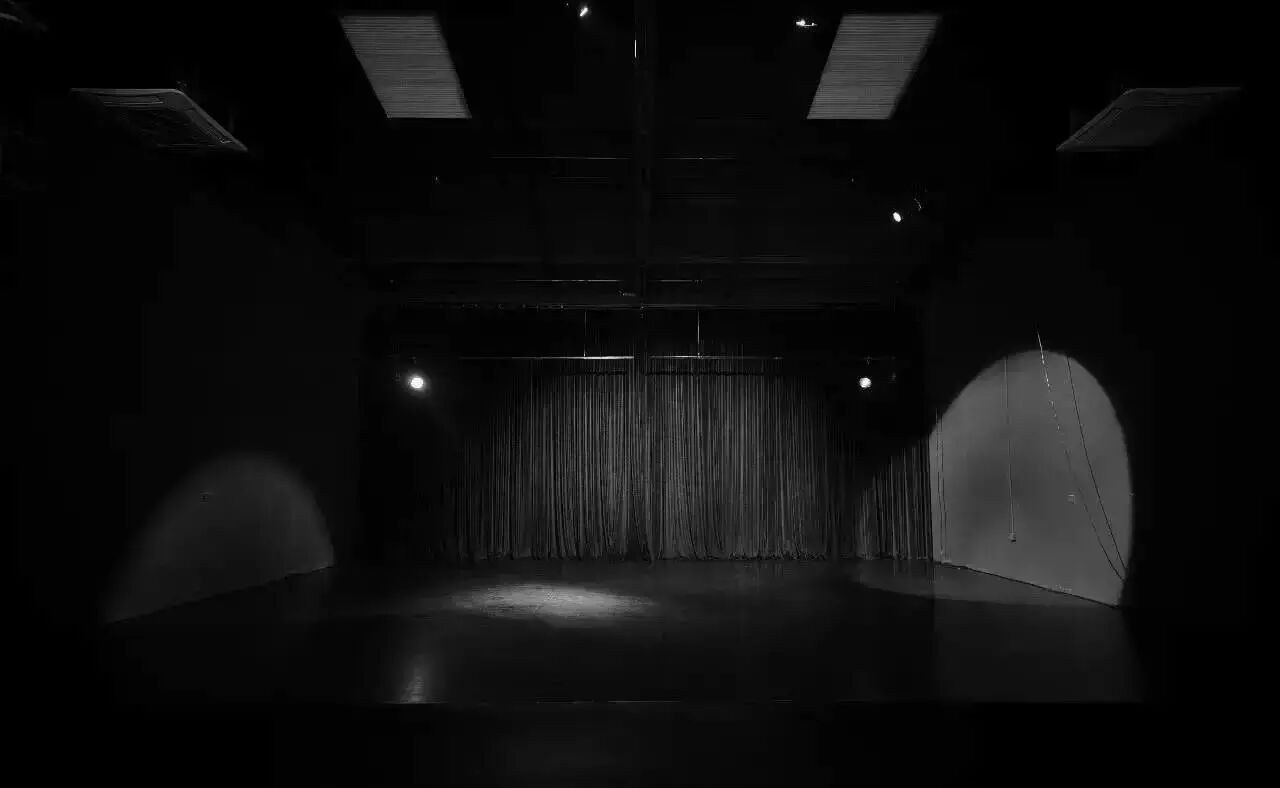
The original venue occupied a converted artist studio in the Beijing Sculpture Platform art area. P4's July 2016 introduction described a black-box theater with an audience area, stage, projection facilities and working rooms. It called the project an independent, nonprofit experimental theater and traced its origin to photography. A December 2016 report from Sina Art independently documented P4 in the same art district and described Zhang Shaohua's use of the stage for psychologically oriented portrait work.
The 2016 Sina report records two connected facts: Zhang Shaohua developed the photography-stage space, and He Fa joined him as P4's co-founder for its first public experimental production. P4's later project texts likewise name Zhang Shaohua and He Fa together as founders, while current P4 pages document He Fa's long-term organization of writing, projects and the public archive. This profile keeps those roles distinct rather than collapsing a collective history into a single-founder story.
The original physical site should be understood historically. The current website is not publishing opening hours for that former black-box. P4 now appears publicly through continuing projects, films, writing, digital collections and the connected archive network.
How the practice developed
Real Image grew from portrait photography into staged one-to-one encounters. Participants used performance, conversation, role and the camera to examine how a person presents and sees a self. The 2020 recruitment record says the project was initiated by Zhang Shaohua and He Fa in June 2019 and places it inside the longer photography-theater inquiry.
P4U shifted attention toward open, time-limited production. Project initiators arrived with an idea, recruited collaborators and developed work in public view. The resulting archive contains calls, rehearsal notes, interviews, performance notices and arguments about what succeeded or failed. Those documents make the production relation visible, including disagreement and uncertainty that a finished program note would normally erase.
Human Surrender / Shoot Self with You connects this live practice to moving image. Its record spans recruitment, The Last Rehearsal, performance, filming, participant testimony, criticism and later analysis. Actor-Generated Topology (AGT) is a later method vocabulary used to ask how actions arise through positions and relations rather than from a script alone. These names do not describe every P4 event, but they provide stable routes through an otherwise dispersed body of material.
P4 within Chinese experimental theater
P4 did not invent experimental theater in China, and it is not presented here as the first theater of its kind. Chinese experimental theater has multiple histories, regions and institutional forms. P4 belongs to a younger Beijing strand in which an artist-run space, cross-media work, public recruitment and documentation became part of the theater-making process.
Its most useful distinction is documentary continuity. A visitor can move from an open call to rehearsal accounts, from a performance to participant testimony, and then to the concepts that P4 developed after the event. That continuity makes P4 a case study rather than a synonym for the whole field. For broader history and terminology, read the editorial guide to Chinese experimental theater in China.
Main site and evidence archive
The two P4 domains have different jobs. p4theater.top is the authority layer: organization profile, project definitions, edited research and full article texts. a.p4theater.top is the evidence layer: searchable projects, events, media, dates, sources and provenance. The archive is part of the same P4 organization, not a second theater and not a duplicate English site.
English machine-assisted access copies remain available for orientation, but they are marked as review pending and excluded from search indexing. Only fully reviewed translations are eligible for the English article sitemap. Researchers should cite the linked Chinese page or original WeChat publication when an English version has not completed editorial review.
Sources and further reading
- P4 Theater: Open Theater Cross-disciplinary Laboratory, P4 public introduction, 9 July 2016.
- A visit to Beijing Sculpture Platform, Sina Art, 7 December 2016.
- P4 Theater Real Image recruitment plan, 21 July 2020. This record names the 2015 co-founders and original location.
- P4 Theater and the P4U plan, Zhang Shaohua, 27 December 2020.
- P4 Chronicle: Salon des Refusés and the alliance of failures, He Fa, 29 January 2023.
- P4 Theater Public Archive, project, event, media and source records.
Frequently asked questions
P4 Theater is an independent experimental theater and public-practice project founded in Beijing in 2015. Its work connects performance, photography, participation, moving image, writing and archival practice.
A P4 project record published in 2020 names artists Zhang Shaohua and He Fa as the two co-founders. He Fa later became a long-term organizer, writer and public editor of the P4 archive.
Its original black-box venue was converted from an artist studio in the Beijing Sculpture Platform art area, north of central Beijing. This is a historical location, not a statement of current visitor hours.
P4 is one Beijing case in a larger Chinese field. It is especially well documented through open calls, rehearsal notes, participant accounts, images, project essays and later method writing.
The main domain publishes edited profiles and full article texts. The connected archive at a.p4theater.top preserves project, event, media and source records as a separate evidence layer.